
Ingredients
Equipment
Method
Roast the Pork
- Preheat the oven to 425°F/220°C.
- Pat the skin dry with paper towels – this is the key, pat the skin extra well until it's super dry.
- Sprinkle the pork with kosher salt, black pepper and fennel seeds, rub all over the meat then add the olive oil.
- Place the onion, garlic and carrot in a roasting pan, then place the pork shoulder skin side up on top of the vegetables. This elevates the pork slightly for even cooking and the juices add flavor to the gravy.
- Add the liquid to the bottom of the pan to keep the meat moist. You can use dry white wine, or vegetable or beef stock/broth.
- Lower the oven immediately to 320°F/160°C and cook the pork for 1.5 hours uncovered. Covering the meat creates a steamy environment which makes soggy crackling.
- After 1.5 hours of roasting, take out the pork then use a scrunched-up ball of aluminum foil to level the skin surface for even heat distribution. Return to the oven and cook for another 45 minutes to 1 hour, adding water to the pan if needed to keep the meat moist.
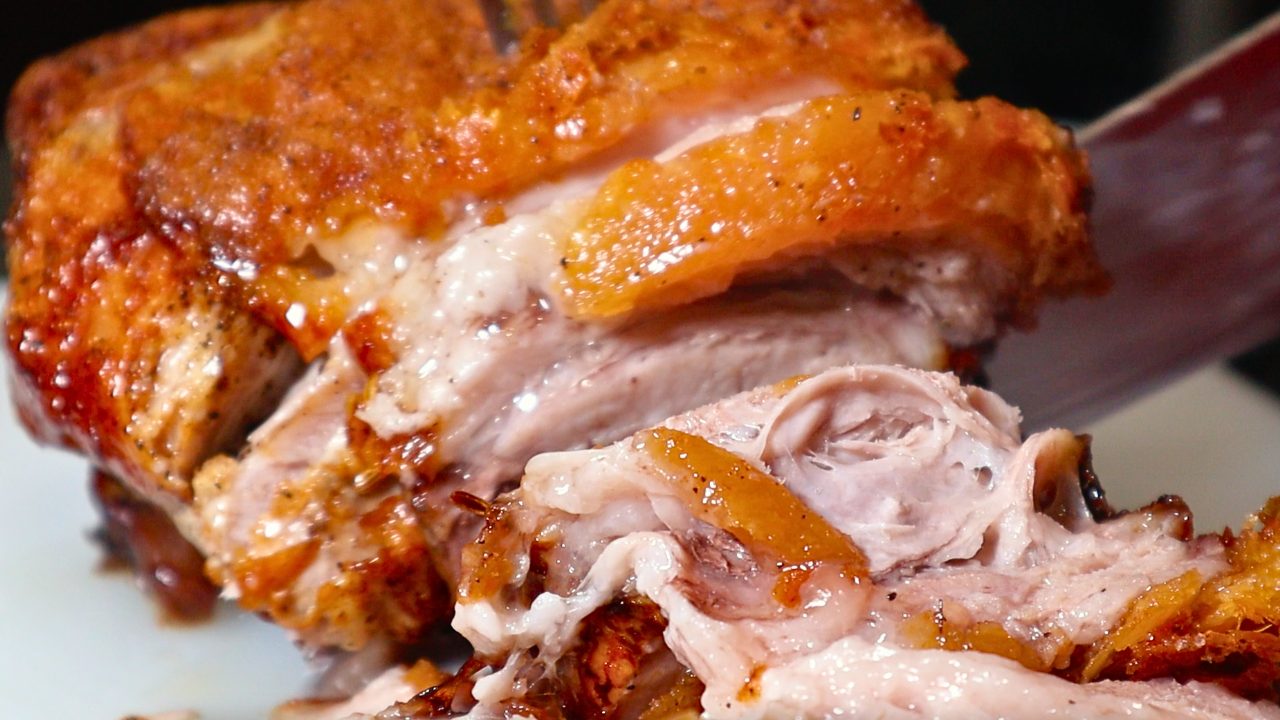
- Turn the oven up to 480–500°F/250°C and cook for another 30 minutes, until the skin is crisp and bubbly all over. Rotate the pan as needed to encourage even crackling.
- Rest the pork loosely covered with aluminum foil for about 20-30 minutes.
Make the Gravy
- Skim off the fat from the roasting pan.
- Place a strainer over a saucepan, transfer the roast vegetables, then press out the juices and discard the waste.
- Heat the saucepan over medium heat, add the gravy mix (or plain flour) and cook for about 1 minute until dissolved.
- Meanwhile, add ½ tablespoon of Better Than Bouillon beef base to a pyrex measuring jug with 2 cups of boiling water and stir until dissolved.
- Add the water and bouillon mix to the saucepan.
- Stir and simmer on low/medium heat until thickened.
Notes
You can also use the roasting pan juices as a simpler gravy, but this bouillon-and-gravy-mix version gives a richer, thicker sauce. Serve with a proper Yorkshire pudding to soak it all up — you can find that companion recipe on the blog. Pork butt or a rolled/boneless shoulder can also be used, though the crackling won't be quite as even since those cuts are more cylindrical.